
Installing solar screens has become one of the most practical ways for California homeowners to reduce indoor heat, improve comfort, and lower cooling expenses without replacing existing windows. With rising electricity rates and increasing demand for energy-efficient home improvements, many property owners want to know exactly how much they should expect to spend before hiring a contractor.
The average cost to install solar screens in California ranges from $75 to $250 per window, while most homeowners spend between $800 and $3,500 for a complete residential project. Larger homes, custom window configurations, premium screen materials, and higher-density mesh systems can increase costs beyond these averages.
What is The Average Solar Screen Installation Cost in California at a Glance
The final price of a project depends on several variables, including the number of windows, accessibility, material selection, and installation complexity.
| Project Type | Average Cost |
| Cost Per Window | $75–$250 |
| Small Home | $800–$2,000 |
| Medium Home | $1,500–$3,500 |
| Large Home | $3,000–$6,000+ |
| DIY Installation | $30–$120 Per Window |
For most households, the largest cost components are screen materials, custom fabrication, and installation labor.
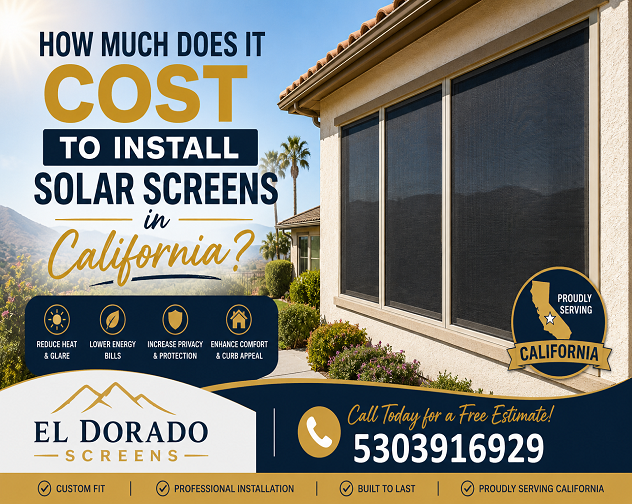
What Are Solar Screens?
Solar screens are specialized exterior window coverings designed to reduce solar heat gain, block harmful ultraviolet radiation, and improve indoor comfort. Unlike traditional window screens, solar screens use dense mesh fabrics engineered to filter sunlight before it reaches the glass.
The primary purpose of a solar screen system is to reduce the amount of heat entering a building while still maintaining visibility and airflow.
Benefits of Solar Screens
- Reduce indoor temperatures
- Lower cooling expenses
- Improve energy efficiency
- Block UV rays
- Reduce glare
- Protect furniture and flooring
- Improve occupant comfort
- Extend HVAC system efficiency
Because they mount on the exterior of windows, they intercept sunlight before heat transfers through the glass.
Which Factors That Affect Solar Screen Installation Costs
Not every home receives the same estimate. Several variables significantly influence pricing.
Window Size and Dimensions
Larger windows require more mesh material and larger frame assemblies.
Examples include:
- Picture windows
- Bay windows
- Floor-to-ceiling windows
- Custom architectural windows
A standard bedroom window typically costs much less than a large decorative window requiring custom fabrication.
Solar Screen Material
The quality of the mesh directly impacts performance and durability.
Common materials include:
- Fiberglass Mesh
- PVC-Coated Polyester
- Vinyl-Coated Polyester
- Aluminum Mesh
Premium materials generally offer improved durability, superior UV resistance, and longer service life.
Solar Blockage Percentage
Screen density is one of the most important purchasing decisions.
Typical options include:
| Solar Blockage | Performance |
| 65% | Moderate heat reduction |
| 80% | Strong heat reduction |
| 90% | Maximum heat reduction |
Many California homeowners choose 80% or 90% blockage because of intense summer sunlight.
Accessibility and Installation Complexity
Installation costs rise when contractors encounter:
- Second-story windows
- Multi-story homes
- Difficult rooflines
- Limited access points
- Oversized windows
Additional labor often increases project costs substantially.
Regional Labor Rates
Labor costs vary significantly throughout the state.
Areas such as:
- Los Angeles
- San Diego
- San Jose
- Orange County
- San Francisco Bay Area
typically experience higher contractor rates than inland regions.
Solar Screen Costs by California Region
Location influences both labor and material pricing.
| Region | Typical Cost Per Window |
| Los Angeles | $100–$250 |
| San Diego | $90–$230 |
| Sacramento | $80–$220 |
| Fresno | $75–$200 |
| San Jose | $100–$260 |
| Oakland | $95–$250 |
| Riverside | $80–$220 |
Southern California
Homes in Southern California often experience higher demand for heat reduction solutions because of extended warm seasons.
Common service areas include:
- Los Angeles County
- Orange County
- Riverside County
- San Bernardino County
- San Diego County
Northern California
Northern California homeowners frequently purchase solar screens for:
- Glare control
- UV protection
- Energy efficiency
- Interior comfort
While temperatures can be lower than Southern California, solar exposure remains a significant concern.
Solar Screen Material Costs Explained
Material selection directly affects long-term value.
Fiberglass Mesh
Fiberglass mesh remains one of the most affordable options.
Benefits include:
- Lower initial cost
- Lightweight construction
- Corrosion resistance
- Easy maintenance
PVC-Coated Polyester
Many premium solar screen systems use PVC-coated polyester because of its durability and superior heat-blocking capabilities.
Advantages include:
- Higher durability
- Better UV resistance
- Enhanced weather resistance
- Longer lifespan
Aluminum Mesh
Aluminum mesh offers excellent strength and longevity but often comes at a higher price point.
How Much Can Solar Screens Reduce Energy Bills?
One of the biggest reasons homeowners invest in solar screens is the potential for energy savings.
By reducing solar heat gain, solar screens help decrease the workload placed on an HVAC system.
Benefits may include:
- Reduced cooling demand
- Lower electricity consumption
- Improved indoor temperature stability
- Reduced peak energy usage
Many homeowners report noticeable reductions in summer cooling expenses after installation.
Return on Investment
The long-term value of solar screens comes from:
- Utility savings
- Reduced HVAC wear
- UV protection
- Increased comfort
Because installation costs are relatively low compared to window replacement, many homeowners view solar screens as a cost-effective upgrade.
Solar Screens vs Other Cooling Solutions
Several alternatives compete with solar screens.
| Solution | Initial Cost | Heat Reduction | Longevity |
| Solar Screens | Moderate | High | High |
| Window Tinting | Low | Moderate | Moderate |
| Solar Window Film | Moderate | Moderate | Moderate |
| Low-E Windows | Very High | High | Very High |
| Exterior Shades | Moderate | High | Moderate |
Compared with full window replacement, solar screens often deliver attractive value at a fraction of the cost.
DIY vs Professional Solar Screen Installation
Homeowners frequently consider whether to install screens themselves.
DIY Installation
Advantages:
- Lower upfront costs
- Flexible schedule
- Material savings
Disadvantages:
- Measurement errors
- Improper fitment
- Limited warranties
- Potential durability issues
Professional Installation
Advantages:
- Accurate measurements
- Custom fabrication
- Warranty protection
- Faster installation
- Professional appearance
For most homes, professional installation produces the best long-term outcome.
Are Solar Screens Worth the Cost in California?
For many homeowners, the answer is yes.
The combination of:
- Reduced cooling costs
- Improved comfort
- UV protection
- Enhanced energy efficiency
- Lower HVAC strain
makes solar screens one of the most affordable exterior window upgrades available.
Properties located in hot inland regions often experience the greatest benefits because cooling systems operate heavily throughout summer.
When compared to the cost of replacing windows, solar screens provide a practical solution that can improve performance without requiring a major renovation.
Frequently Asked Questions
Most homeowners spend between $75 and $250 per window, depending on size, material, and installation requirements.
Many homeowners prefer 80% or 90% blockage because these options provide significant heat reduction while maintaining outward visibility.
Yes. Solar screens reduce solar heat gain, which can lower cooling demand and decrease air conditioning usage.
Quality solar screens commonly last 10 to 20 years depending on material quality, climate exposure, and maintenance practices.
Yes. Solar screen installation is substantially less expensive than replacing windows while still providing meaningful energy-efficiency benefits.