
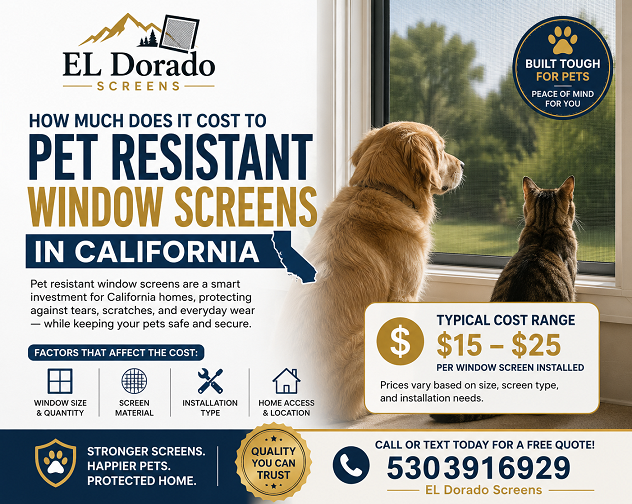
Pet Resistant Window Screens in California typically cost between $25 and $150 per window for materials alone and $75 to $300 per window when professional installation is included. Costs vary based on window size, screen mesh quality, custom fabrication requirements, labor rates, and whether homeowners choose screen repair, rescreening, or complete replacement.
For homeowners with dogs or cats, upgrading to Pet Resistant Window Screens can reduce recurring repair costs while providing a more durable solution than traditional Fiberglass Screens.
Pet Resistant Window Screen Installation Cost at a Glance
The total investment depends on the condition of your existing screens and the type of material selected.
| Service | Average Cost |
| Pet Screen Mesh Only | $25–$75 |
| Rescreen Existing Frame | $40–$120 |
| Full Screen Replacement | $75–$300 |
| Custom Window Screens | $100–$500+ |
| Sliding Screen Door Installation | $150–$600 |
Most California homeowners spend between $150 and $800 when upgrading several windows throughout a property.
What Are Pet Resistant Window Screens?
Pet Resistant Window Screens are heavy-duty screening products designed to withstand scratching, clawing, and impact from household pets. Unlike standard Fiberglass Screen Mesh, these screens typically use Vinyl-Coated Polyester Mesh, which offers significantly greater durability.
The primary goal of a Pet Screen System is to prevent frequent tears and punctures that occur when cats climb screens or dogs push against windows.
How Pet Screens Differ from Standard Fiberglass Screens
Traditional Fiberglass Screens prioritize affordability and visibility. While effective for keeping insects outside, they are vulnerable to pet damage.
By comparison, Pet Resistant Screen Mesh offers:
- Increased tear resistance
- Improved puncture resistance
- Greater tensile strength
- Better scratch resistance
- Longer service life
Although these screens cost more initially, many homeowners find the investment worthwhile because replacement frequency decreases significantly.
Common Materials Used
Several materials are available within the Window Screen Industry.
- Vinyl-Coated Polyester Mesh
- Heavy-Duty Polyester Screening
- Stainless Steel Mesh
- Aluminum Screen Mesh
- Reinforced Synthetic Fibers
Among these options, Vinyl-Coated Polyester Mesh remains the most popular choice for residential pet applications.
Which Factors That Affect Pet Screen Installation Costs
Not every installation costs the same. Several variables influence pricing across California.
Window Size
Larger windows require more materials and additional labor.
Common size categories include:
- Small bathroom windows
- Standard bedroom windows
- Large living room windows
- Oversized picture windows
- Custom architectural windows
A larger Screen Mesh Surface Area naturally increases project costs.
Screen Material Quality
Material selection plays a major role in pricing.
Economy-grade products typically cost less but may sacrifice longevity. Premium Pet Resistant Mesh products deliver stronger performance and extended durability.
Existing Frame Condition
If existing Window Screen Frames remain structurally sound, contractors can often perform a simple rescreening.
However, damaged frames may require:
- Frame rebuilding
- Corner replacement
- Complete screen replacement
- New hardware installation
These additional services increase overall project expenses.
Labor Rates
California labor rates vary significantly by region.
Metropolitan areas often experience higher installation costs due to:
- Increased operating expenses
- Higher wages
- Greater demand for contractors
Rural areas frequently offer lower installation pricing.
Custom Fabrication
Many homes require Custom Window Screens due to non-standard dimensions.
Custom fabrication may involve:
- Special measurements
- Custom frame construction
- Specialty mesh installation
- Decorative frame options
Custom work generally increases project costs compared to standard replacements.
California Pet Screen Installation Cost by Window Type
Different window styles affect installation complexity.
| Window Type | Typical Cost Range |
| Single-Hung Window | $75–$150 |
| Double-Hung Window | $80–$175 |
| Casement Window | $90–$200 |
| Sliding Window | $100–$250 |
| Bay Window | $150–$350 |
| Picture Window | $150–$400 |
| Custom Window | $200–$500+ |
Larger or uniquely shaped windows often require specialized fabrication and installation techniques.
Cost of Pet Screens Compared to Other Screen Materials
Homeowners frequently compare available screen options before making a decision.
| Screen Type | Durability | Cost |
| Fiberglass Screen | Moderate | Low |
| Aluminum Screen | Moderate | Moderate |
| Pet Resistant Screen | High | Moderate |
| Solar Screen | High | Moderate-High |
| Stainless Steel Screen | Very High | High |
Pet Screen vs Fiberglass
Fiberglass Screens are less expensive but more susceptible to tearing.
Pet Screen vs Aluminum
Aluminum Screens provide durability but can dent and crease more easily than some pet-resistant products.
Pet Screen vs Solar Screens
Solar Screens primarily focus on heat reduction and UV control, while Pet Resistant Screens focus on durability and pet protection.
Pet Screen Installation Costs Across California
Pricing often differs by geographic market.
| Region | Average Cost Range |
| Los Angeles | $100–$300 |
| San Diego | $100–$300 |
| Orange County | $100–$325 |
| San Francisco Bay Area | $125–$350 |
| San Jose | $125–$350 |
| Sacramento | $90–$275 |
| Fresno | $75–$250 |
| Riverside | $80–$275 |
Higher-cost regions generally reflect elevated labor expenses and stronger demand for home improvement services.
Repair vs Replacement: Which Option Saves More Money?
If the existing frame remains in good condition, Screen Rescreening is usually the most economical solution.
When Repair Makes Sense
Repair is often ideal when:
- Frame damage is minimal
- Mesh is the primary issue
- Hardware remains functional
- Structural integrity is intact
When Replacement Is Necessary
Replacement becomes more practical when:
- Frames are bent
- Corners are broken
- Hardware has failed
- Significant corrosion exists
For many homeowners, replacing severely damaged units prevents recurring maintenance expenses.
How Long Do Pet Resistant Window Screens Last?
Most professionally installed Pet Resistant Window Screens last between 7 and 15 years.
Several factors influence longevity:
- Pet activity levels
- Sun exposure
- Installation quality
- Material grade
- Maintenance practices
California’s strong sunlight can accelerate wear on lower-quality screening products, making premium materials a worthwhile investment.
Maintenance Tips
To maximize lifespan:
- Clean screens regularly
- Inspect frames annually
- Remove debris buildup
- Repair minor damage promptly
- Avoid excessive pressure on mesh surfaces
Routine maintenance helps preserve both appearance and functionality.
Are Pet Resistant Screens Worth the Investment?
For many households, the answer is yes.
Benefits
- Reduced replacement frequency
- Greater durability
- Improved pet safety
- Lower long-term maintenance costs
- Enhanced resistance to tearing
Potential Drawbacks
- Higher initial purchase price
- Slightly reduced visibility compared to some standard mesh products
However, homeowners with active dogs or cats often recover the additional investment through fewer repairs and replacements.
Final Thoughts
Installing Pet Resistant Window Screens is one of the most practical upgrades for pet-owning households throughout California. While initial costs exceed those of standard Fiberglass Screens, the benefits of improved durability, reduced maintenance, and enhanced protection frequently outweigh the added expense. By comparing material options, evaluating frame conditions, and obtaining multiple contractor quotes, homeowners can identify the most cost-effective solution for their specific needs while improving the longevity of their home’s screening system.
Frequently Asked Questions
Most homeowners pay between $75 and $300 per window for professionally installed Pet Resistant Window Screens.
Yes. Pet Resistant Mesh is specifically engineered to resist scratching, tearing, and punctures better than traditional Fiberglass Screen Mesh.
In many cases, yes. Existing Window Screen Frames can often be rescreened if they remain structurally sound.
Most installations last between 7 and 15 years, depending on usage, maintenance, and environmental conditions.
High-quality Pet Resistant Screens generally maintain excellent airflow while providing increased durability.
For homeowners with dogs or cats, the reduction in repairs and replacements often makes them a cost-effective long-term investment.