
A retractable screen door offers homeowners a practical way to improve natural ventilation, maintain insect protection, and enhance indoor-outdoor living spaces without permanently obstructing a doorway. Across California, homeowners increasingly choose these systems because they provide a clean appearance while allowing fresh air to circulate through the home.
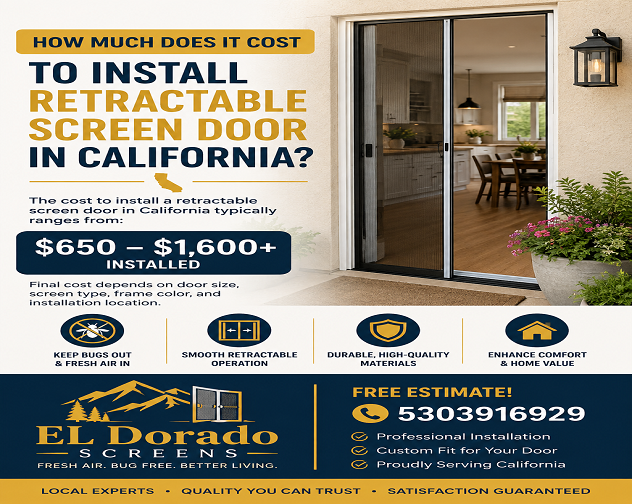
The average cost to install a retractable screen door in California ranges from $350 to $1,500 per door, although premium systems for large openings or custom configurations can exceed $2,000. Most homeowners spend between $700 and $1,000 for a professionally installed system.
The final price depends on factors such as door dimensions, screen brand, mesh type, installation complexity, and local contractor labor rates.
What is The Average Retractable Screen Door Installation Cost in California
Most homeowners researching retractable screen door installation costs want a quick estimate before contacting contractors. While every project differs, statewide pricing follows predictable patterns.
| Installation Type | Average Cost |
| Budget Installation | $350 – $600 |
| Standard Installation | $700 – $1,000 |
| Premium Installation | $1,000 – $1,500+ |
| Custom Large Openings | $1,500 – $2,500+ |
A standard installation generally includes the screen system, mounting hardware, labor, and a basic adjustment of the operating mechanism.
Premium projects often involve custom fabrication, specialty mesh materials, oversized openings, or well-known brands such as Phantom Screens.
What Will a Retractable Screen Door Cost for Your Home?
Door size, screen brand, mesh type, and your local labor rate all shift the number from those ranges. To get a figure built around your actual opening, use our retractable screen door installation cost calculator — enter your door type, dimensions, and location to get a realistic estimate before you call anyone.
Retractable Screen Door Cost Breakdown
Understanding where your money goes helps you evaluate contractor estimates more effectively.
Material Costs
The largest portion of most projects comes from the actual screen door system.
| Component | Cost Range |
| Basic Screen System | $150 – $400 |
| Mid-Range Screen System | $400 – $800 |
| Premium Screen System | $800 – $1,300+ |
Premium systems generally feature stronger roller mechanisms, smoother operation, better warranties, and enhanced durability.
Labor Costs
Professional installation typically costs between $150 and $500 depending on project complexity.
Labor expenses often include:
- Measuring door openings
- Preparing the frame
- Installing guide rails
- Aligning tracks
- Adjusting screen tension
- Final operational testing
In major metropolitan areas such as Los Angeles, San Diego, and San Francisco, labor costs tend to be higher than statewide averages.
Additional Project Costs
Some homes require modifications that increase installation expenses.
Common upgrades include:
- Custom frame adjustments
- Specialty mesh upgrades
- Structural modifications
- Additional hardware
- Motorized operating systems
- Decorative finishes
Cost by Door Type
The size and style of the opening significantly affect pricing.
Single Entry Doors
A standard single entry door is usually the least expensive installation.
Average Cost: $350 – $800
Front Doors
Many homeowners install retractable screens on their primary entryways to improve airflow.
Average Cost: $400 – $900
Sliding Glass Doors
Large openings require wider screen systems and additional hardware.
Average Cost: $500 – $1,200
Patio Doors
Patio installations remain one of the most popular applications throughout California.
Average Cost: $500 – $1,200
French Doors
French door retractable screens typically require dual-panel systems and more complex installation procedures.
Average Cost: $700 – $1,500
Double Door Openings
Oversized openings often require custom manufacturing.
Average Cost: $800 – $1,700+
Retractable Screen Door Cost by Brand
The manufacturer plays a major role in overall project pricing.
Phantom Screens
Phantom Screens remains one of the most recognized brands in North America.
Typical Installed Cost:
$800 – $1,500+
Benefits include:
- Strong warranty coverage
- Smooth operation
- Custom sizing
- Extensive dealer network
Mirage Screen Systems
Mirage Screen Systems are popular among homeowners seeking premium quality and customization.
Typical Installed Cost:
$700 – $1,400
Brisa Retractable Screens
Brisa Retractable Screens offer a balance between affordability and durability.
Typical Installed Cost:
$500 – $1,100
Genius Screens
Many homeowners choose Genius Screens for budget-conscious projects.
Typical Installed Cost:
$400 – $900
Which Factors That Affect Retractable Screen Door Installation Costs
No two installations are identical. Several variables influence final pricing.
Door Dimensions
Larger openings require:
- More screen material
- Larger housings
- Stronger tension systems
- Additional installation time
Mesh Type
Different mesh materials can significantly impact costs.
Common options include:
- Fiberglass Mesh
- Aluminum Mesh
- Solar Screen Mesh
- Pet Resistant Mesh
- No-See-Um Mesh
Premium mesh products often improve durability and insect protection while increasing material costs.
Installation Complexity
Homes with uneven surfaces, older frames, or unique architectural features often require additional labor.
Examples include:
- Historic homes
- Custom entryways
- Non-standard openings
- Retrofit installations
Geographic Location
Regional labor rates vary across California.
Urban areas generally command higher installation costs than smaller communities.
Retractable Screen Door Costs by California City
Pricing can vary substantially depending on local labor markets.
| City | Typical Installed Cost |
| Los Angeles | $700 – $1,500 |
| San Diego | $650 – $1,400 |
| San Francisco | $800 – $1,700 |
| San Jose | $750 – $1,600 |
| Sacramento | $600 – $1,300 |
| Fresno | $500 – $1,200 |
The highest prices generally occur in regions with elevated labor expenses and higher costs of living.
Are Retractable Screen Doors Worth the Cost?
For many homeowners, the answer is yes.
Benefits include:
- Improved airflow
- Enhanced comfort
- Better ventilation
- Insect protection
- Increased curb appeal
- Improved outdoor living experience
Unlike traditional screen doors, retractable systems disappear when not in use, preserving the appearance of the doorway.
Many homeowners also appreciate the flexibility these systems provide during California’s warm seasons.
Retractable Screen Doors vs Traditional Screen Doors
| Feature | Retractable Screen Door | Traditional Screen Door |
| Appearance | Hidden when not used | Always visible |
| Cost | Higher | Lower |
| Customization | Extensive | Limited |
| Curb Appeal | High | Moderate |
| Flexibility | Excellent | Moderate |
Although retractable systems cost more initially, many homeowners prefer the aesthetic advantages.
DIY vs Professional Installation
DIY Installation
A homeowner installing a basic screen system may spend:
- Screen kit: $150–$500
- Tools: $50–$150
- Materials: $25–$100
Potential savings can be substantial, but mistakes often lead to operational issues.
Professional Installation
Professional installers provide:
- Accurate measurements
- Proper alignment
- Warranty protection
- Manufacturer compliance
- Reliable operation
For premium products, professional installation is often recommended.
Final Thoughts
Installing a retractable screen door in California is a relatively affordable home improvement project that enhances ventilation, comfort, and usability. Most homeowners can expect to spend between $700 and $1,000 for a professionally installed system, though costs vary according to door type, screen brand, mesh material, and local contractor rates.
Before moving forward, compare multiple estimates, review product warranties, and evaluate whether standard or custom screen systems best fit your home’s needs. By understanding the factors that influence pricing, homeowners can make informed decisions and maximize the value of their investment.
Frequently Asked Questions
Most installations cost between $350 and $1,500, with an average homeowner spending approximately $700 to $1,000.
Labor generally ranges from $150 to $500, depending on installation complexity.
A quality system can last 10 to 20 years with proper maintenance.
Many homeowners choose Phantom Screens because of their durability, customization options, and warranty support.
While they may not dramatically increase resale value, they often improve home functionality, curb appeal, and overall buyer perception.